
Reptile Care – The Light & Shade Method
Reptiles rely on environmental gradients to regulate their body temperature, UV exposure, and activity levels. In the wild, this is achieved naturally through movement between areas of sunlight and shade. In captivity, however, these gradients must be created deliberately.
The Light & Shade Method is a husbandry approach that focuses on providing controlled thermal, UV, and light zones within the enclosure, allowing reptiles to self-regulate their exposure throughout the day. When implemented correctly, it supports natural behaviour, reduces stress, and forms the foundation of safe, long-term reptile care.
At a Glance
Thermal Gradients
Providing a temperature gradient is a fundamental principle of reptile care. This means maintaining a hotter basking area at one end of the enclosure while allowing temperatures to gradually decrease toward a cooler retreat zone at the opposite end.
This thermal gradient enables reptiles to regulate their body temperature naturally by moving between zones, choosing the conditions they require at any given time.
Modern husbandry goes a step further. Alongside heat, reptiles also require the correct intensity of UV and full-spectrum visible light across this gradient. Together, these elements form what is known as the Light and Shade Method — an approach developed to more accurately replicate natural sunlight conditions in captivity.
Creating Zones
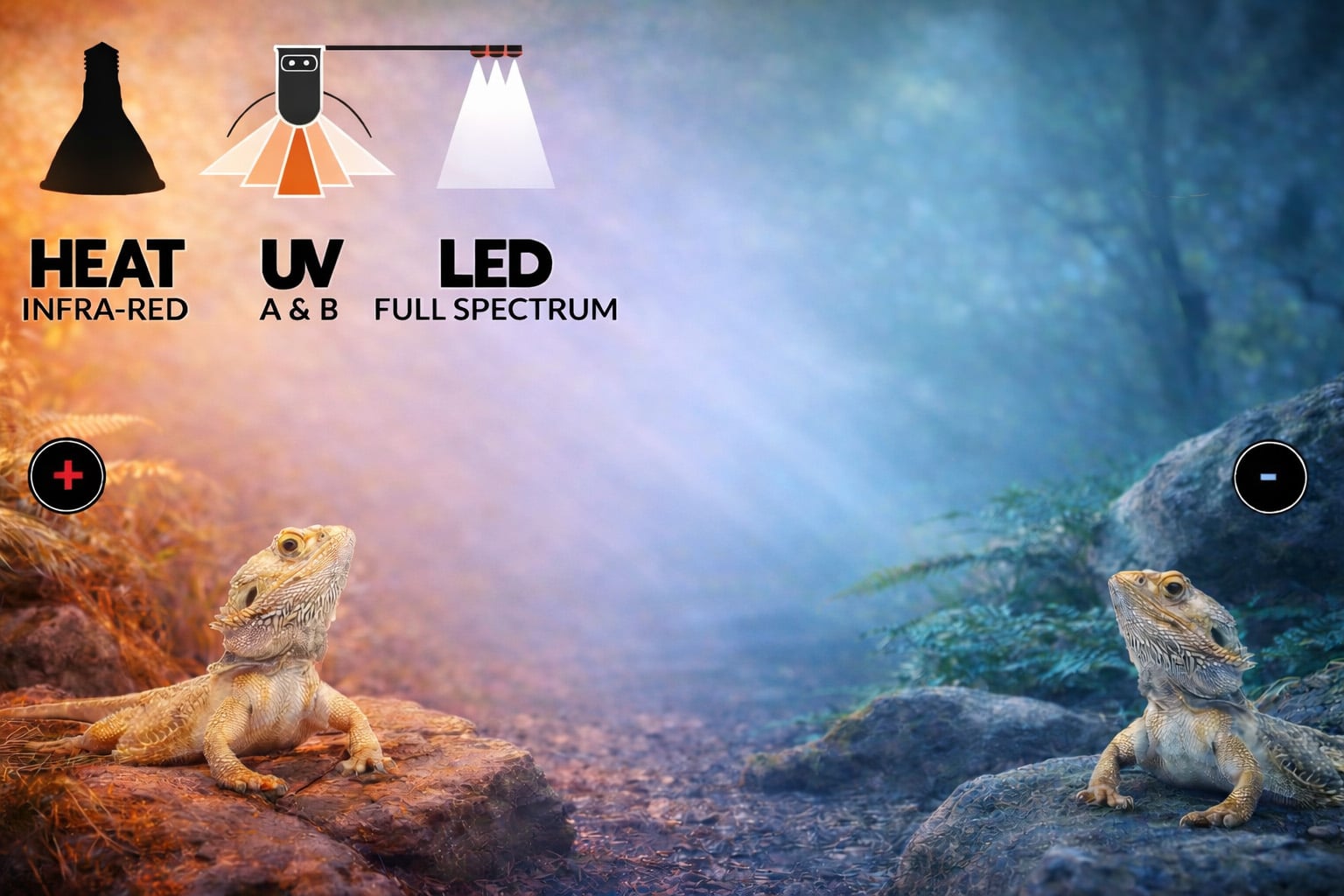
The goal of the Light and Shade Method is simple: to create a bright, warm basking zone alongside a cooler, shaded zone, giving your reptile meaningful choice.
In the wild, reptiles receive heat, UV, and visible light from a single source — the sun. Replicating this in captivity means safely grouping heating and lighting systems so they project onto the basking area together, rather than separating them across the enclosure.
By doing this, heat and light are delivered simultaneously to the basking zone, allowing reptiles to utilise them naturally and regulate their exposure as they would in nature.
The enclosure should then transition into a cooler, dimmer, and more shaded area at the opposite end. This zoning supports natural behaviour, reduces stress, and encourages healthy activity patterns.
Lighting and heating do not have to be arranged strictly front-to-back. If enclosure design allows, they can also be positioned side-to-side — the key is maintaining a clear contrast between bright/warm and cool/shaded zones.
Temperatures & Heating
Temperature requirements vary depending on species, but achieving stable, appropriate basking temperatures always begins with correct enclosure placement.
Avoid positioning vivariums in areas subject to extreme room temperature fluctuations, direct sunlight, draughts, or cold external walls. Stable ambient conditions make it significantly easier to achieve consistent internal temperatures.
Establishing correct temperatures takes planning and the right equipment — shortcuts here often lead to poor results.
Heat Sources
A suitable heat source must be capable of producing the required basking temperature at the correct distance. Low-wattage or under-powered heaters often fail to deliver sufficient infrared heat to the basking zone, even if they appear hot at close range.
Ceramic heaters and deep heat projectors vary significantly in quality and output. Choose a heat source designed to project usable heat into the enclosure, rather than one that simply heats the air immediately around it.
As a general rule, it is better to slightly over-specify a heat source and control it with a thermostat than to under-specify and struggle to reach target temperatures.
If basking temperatures cannot be achieved, the cause is almost always insufficient heat output rather than enclosure design.
Safety
Heat sources can reach extremely high temperatures and must always be installed safely.
- Use only ceramic lamp holders and fittings rated for high heat
- Never run high-temperature heat sources in plastic fittings
- Always use protective lamp guards where there is any risk of contact
- Never operate heat sources without a reliable thermostat
Proper installation protects both the animal and the enclosure from burns, overheating, and fire risk.
UV Lighting
Many reptiles require UV lighting to remain healthy. UVB exposure allows reptiles to synthesise vitamin D₃, which is essential for calcium metabolism, skeletal health, immune function, and overall wellbeing.
Without adequate UV exposure, reptiles may develop serious health issues, including metabolic bone disease.
UV lighting should:
- Be appropriate for the species
- Be positioned at the manufacturer’s recommended distance
- Be replaced at correct intervals, even if the lamp still appears bright
Full Spectrum Lighting
UV alone is not enough.
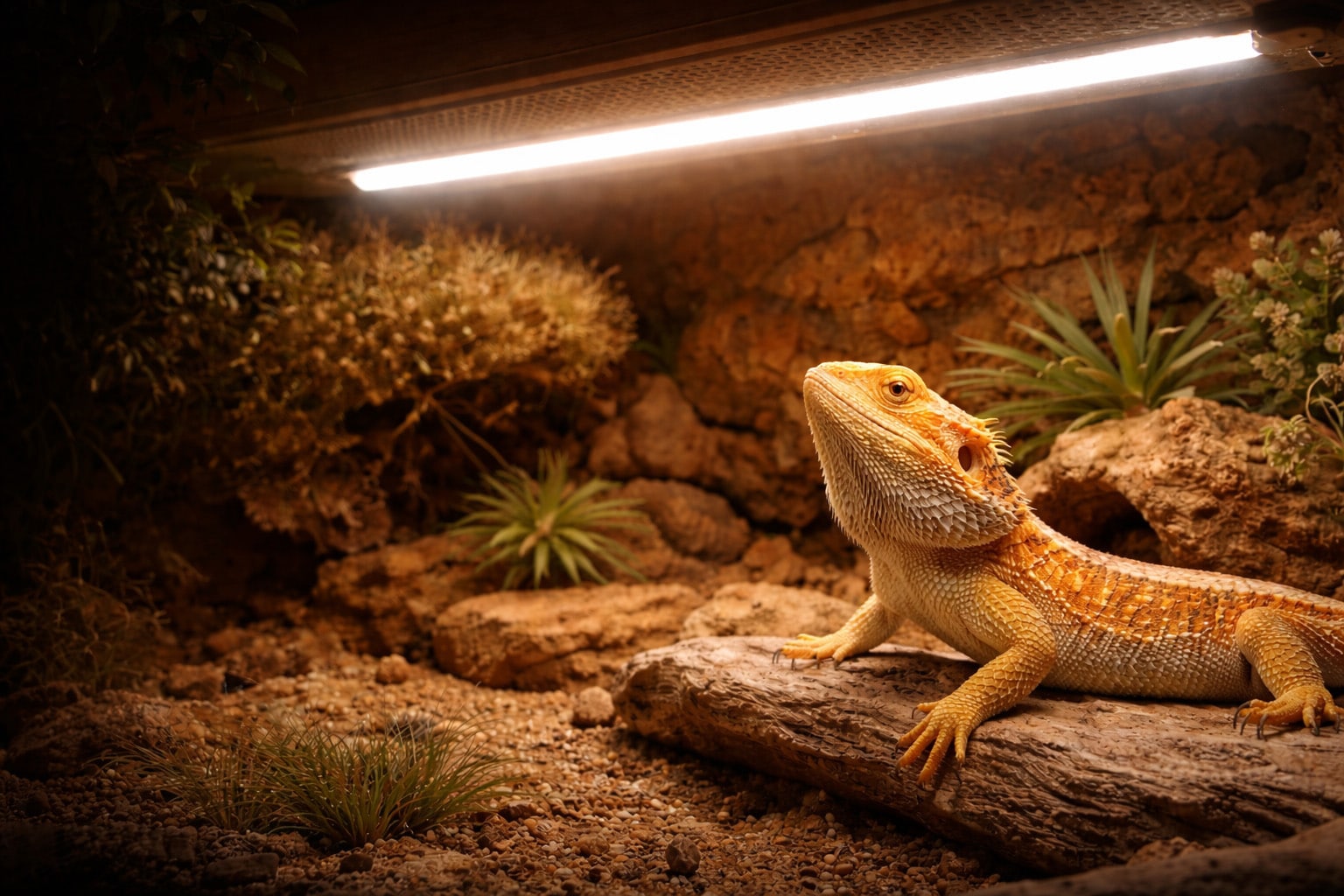
In natural sunlight, reptiles are exposed to infrared heat, UV, and full-spectrum visible light simultaneously. Full-spectrum lighting plays an important role in stimulating natural behaviour, regulating circadian rhythms, and supporting neurological and hormonal health.
Many reptiles possess light-sensitive organs linked to hormone regulation and sleep cycles. Providing high-quality visible light helps replicate these natural signals in captivity.
For a truly effective lighting setup, heat, UV, and full-spectrum lighting should work together as part of a unified system.
Thermostats
All heat sources must be controlled by a thermostat.
A quality thermostat allows:
- Accurate temperature control
- Day and night temperature variation where required
- Safe regulation of powerful heat sources
- Improved stability and energy efficiency
Selecting the correct thermostat is just as important as selecting the heat source itself, and should be matched to the type of heater being used.
Further Reading
Why Calcium Is Important For Reptiles → Understand the role of calcium supplementation and the vitamin D₃ cycle in supporting reptile bone health and long-term wellbeing.
Understanding UVB Lighting for Reptiles → A clear explanation of UVB lighting, intensity levels, and how UVB supports reptile health in captivity.
Understanding Full Spectrum Lighting for Reptiles → Learn how full spectrum lighting supports natural behaviour, activity patterns, and overall wellbeing in reptiles.
Choosing The Correct Thermostat → With multiple types of thermostats available, this guide explains the differences and helps you select the most suitable option for controlling reptile environments.
Final Thoughts
The Light and Shade Method is not about adding complexity — it’s about creating choice.
By providing a clear gradient of heat and light, reptiles can self-regulate their exposure in a way that mirrors natural behaviour. This supports natural behaviour, improved welfare, and more appropriate activity patterns.
When heat, UV, and visible light are correctly combined and controlled, the enclosure becomes a functional environment rather than just a container.
For keepers who want to understand the science behind UVB, nutrition and MBD, Arcadia’s reptile books provide the full research background Arcadia Reptile Books →