
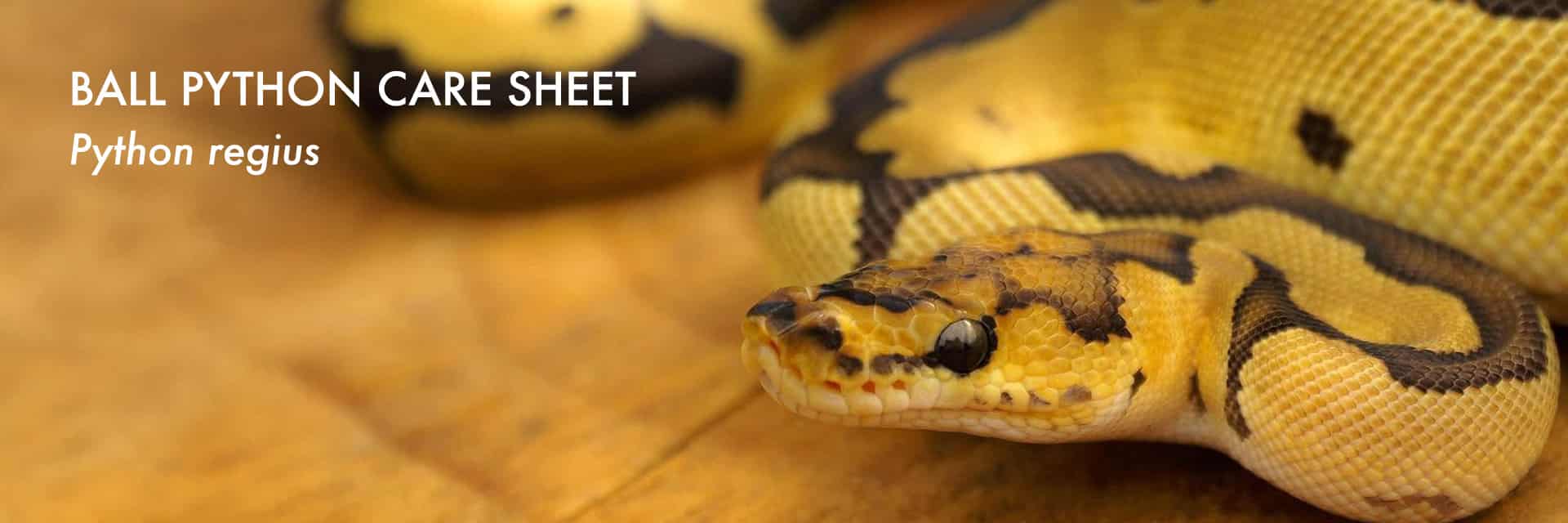
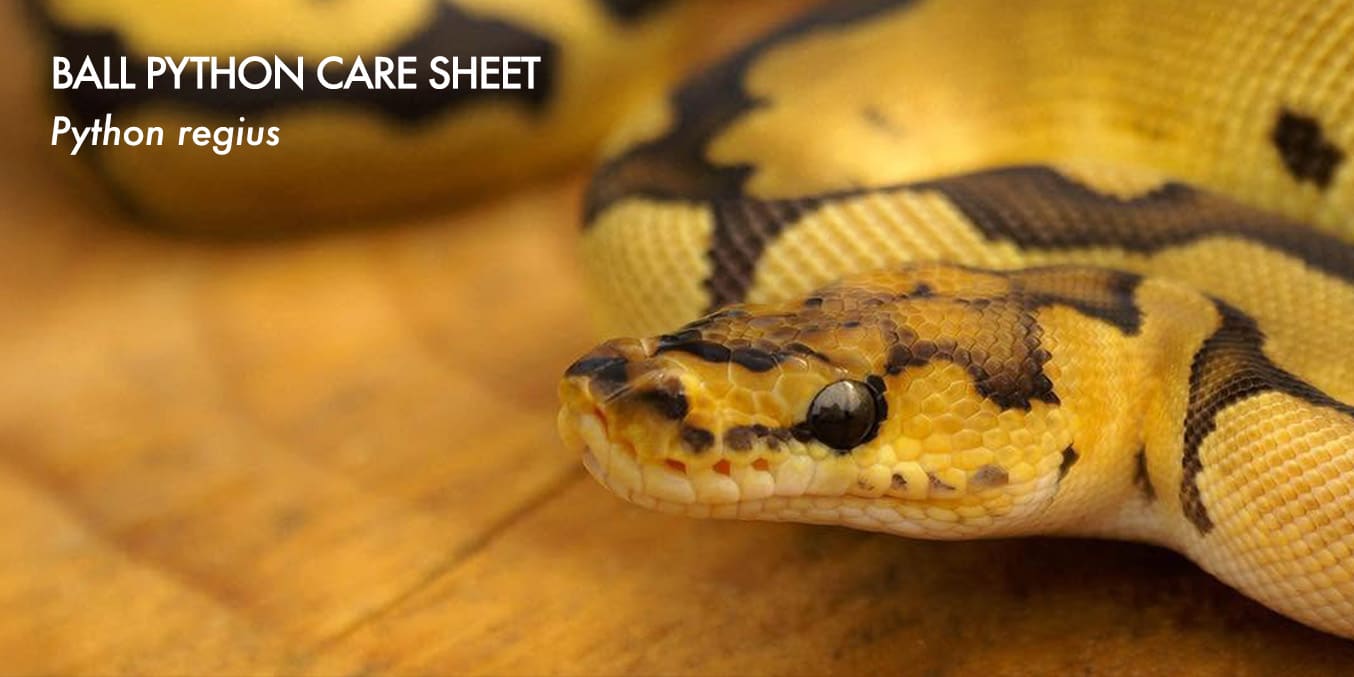
Royal Python (Ball Python) – Python regius
Royal Pythons are one of the most popular pet snakes in the UK, valued for their generally calm temperament, manageable adult size and extraordinary range of captive-bred morphs.
They are also a long-term commitment. With correct care, a Royal Python can live for more than 20 years, so its enclosure, equipment and ongoing welfare should be planned properly from the outset.
This care sheet explains the essential principles required to keep a healthy, settled Royal Python, with an emphasis on security, consistency and modern welfare-led husbandry.
At a Glance
Natural History & Behaviour
Royal Pythons originate from West Africa, where they inhabit grassland and forest habitats and commonly shelter in burrows, termite mounds and other secure spaces during the day.
They are primarily crepuscular, becoming more active around dawn and dusk. Their familiar habit of curling into a tight ball when threatened is the reason they are often called Ball Pythons outside the UK.
Understanding this natural behaviour explains many of their captive needs. Royal Pythons benefit from secure hiding places, visual cover, a clear thermal gradient and an enclosure that allows them to choose between warmth, shade and security throughout the day.
Although captive-bred Royal Pythons can become very calm when handled thoughtfully, they should never be treated as ornamental display animals or as a pet that requires constant handling. Their welfare depends on stable conditions, appropriate feeding and a calm, predictable routine.
Enclosure & Environment
Enclosure Size
A Royal Python’s vivarium should be secure, well ventilated, easy to clean and large enough to create a genuine warm-to-cool thermal gradient.
- Average adults: A minimum recommended enclosure size of 120 × 60 × 60 cm (4 × 2 × 2 ft)
- Larger adults: Larger enclosures should be selected where required by the individual snake’s size
- Juveniles: May begin in a smaller, secure enclosure, but should be upgraded as they grow
A larger enclosure does not automatically cause stress when it is furnished properly. The key is providing enough hides, clutter and visual cover for the snake to feel secure while still being able to explore, thermoregulate and behave naturally.
Royal Pythons should be housed individually. They are naturally solitary and keeping them separately makes it easier to monitor feeding, body condition, shedding and general health.
Layout, Security & Enrichment
A well-designed Royal Python enclosure should provide:
- At least two secure, close-fitting hides — one on the warm side and one on the cool side
- A humid hide for use during shedding
- Visual cover using cork bark, artificial plants, branches, leaf litter or other safe décor
- Opportunities for gentle climbing using strong, securely fixed branches
- An escape-proof design, with doors or access points secured appropriately
Royal Pythons should be able to move between warmer and cooler areas without having to leave the security of a suitable hide. Open, bare vivariums can make them feel exposed and may contribute to stress or feeding problems.
Humidity
Humidity should normally be maintained at around 50–60% at the cool end of the enclosure, measured using a reliable digital hygrometer.
During shedding, humidity can be increased temporarily to around 80%, then allowed to fall again. A humid hide is often a more controlled and practical way to support shedding than keeping the entire enclosure permanently damp.
Constantly high humidity, poor ventilation or wet substrate can encourage mould and bacteria, creating an unhealthy environment. The aim is a stable enclosure with a humidity gradient, not a damp vivarium.
Substrate
Substrate should support good hygiene, provide a natural feel underfoot and help maintain suitable humidity without becoming wet or waterlogged.
Suitable options may include coconut husk, reptile-safe organic soil mixes, paper-based substrates, lignocel or suitable bark-based products. The best choice depends on your enclosure design, cleaning routine and how well the substrate holds humidity.
Remove faeces and urates promptly. Avoid substrates that are excessively dusty, constantly wet or likely to become mouldy.
Heating & Lighting
Correct heating and a stable thermal gradient are central to successful Royal Python care. Your snake must be able to choose between warmer and cooler areas, rather than being kept at one temperature throughout the enclosure.
Temperature Requirements
- Warm / basking area: 30–32°C
- Cool end: 24–26°C
- Night-time: All visible lights should be switched off; provide non-light-emitting supplementary heat only where needed to maintain safe ambient temperatures
Measure temperatures at the level where the snake actually spends its time. Use reliable digital thermometers and regularly check the enclosure independently with an infrared thermometer.
Every heat source must be controlled by a suitable thermostat. A thermostat is not optional; it is essential safety equipment that helps prevent overheating, burns and dangerous temperature fluctuations.
Recommended Equipment Types
- Guarded overhead radiant heat source: selected to suit the enclosure size, layout and room temperature
- Suitable thermostat: matched correctly to the heat source
- Digital thermometers and hygrometer: for accurate daily monitoring
- Heat guard: wherever a snake could come into contact with an internal heat source
Royal Pythons are powerful snakes and can climb surprisingly well. Any internal lamp, ceramic heater or radiant heat source must be guarded securely so direct contact is impossible.
Lighting & UVB
Royal Pythons benefit from a predictable day-and-night cycle, together with a gentle gradient from light into shade. Lighting should be arranged so that the brighter area is grouped with the warm end, allowing the cool end to remain more shaded.
A low-level UVB gradient is recommended, provided alongside secure shaded areas and multiple hides so the snake can regulate its own exposure. Suitable systems for Royal pythons include the Arcadia LumenIZE 2.5% UVB Kit and the Arcadia ProT5 ShadeDweller Max 2.5% UVB Kit.
- Aim for a gentle UVB gradient, with a maximum UVI of around 1.0 in the basking area
- Ensure the UVB level falls to zero in shaded areas
- Provide multiple shaded hides and areas of visual cover
- Use lower UVB levels for albino and particularly light-sensitive morphs
- Replace lamps in line with the manufacturer’s guidance
Use a timer to create a consistent light cycle, typically around 12 hours of light followed by 12 hours of darkness. Do not use coloured night bulbs, as Royal Pythons require a proper dark period.
Diet & Supplements
Diet
Royal Pythons are obligate carnivores, feeding on appropriately sized whole prey. A properly selected frozen-thawed rodent diet provides the nutrition they require, so routine vitamin or calcium supplementation is not normally needed.
Frozen-thawed prey is strongly recommended for welfare and safety reasons. It should be fully thawed and warmed appropriately before offering with feeding tongs inside the snake’s own enclosure.
- Hatchlings / juveniles: Appropriately sized prey every 5–7 days
- Adults: Appropriately sized prey every 7–14 days, adjusted for body condition, prey size and the individual snake
As a guide, prey should be slightly wider than the widest part of the snake’s body. Do not overfeed in an attempt to make a Royal Python grow faster; maintaining a healthy body condition is more important than rapid growth.
Do not offer live prey. Royal Pythons should feed readily on appropriately prepared frozen-thawed prey. If a snake refuses meals for a prolonged period, there is usually an underlying reason that needs to be identified.
Review temperatures, enclosure security, hydration, recent handling, shedding, the snake’s previous feeding routine and its established prey type before making unnecessary changes.
Water
Fresh, clean water should always be available in a stable, tip-resistant bowl placed toward the cool end of the enclosure.
The bowl should be large enough for the snake to soak if desired. Replace the water at least daily, and immediately if it becomes contaminated with substrate, urates or faeces.
Health, Hygiene and Handling
Cleaning Routine
- Daily: Check the snake, spot-clean any waste and refresh drinking water
- Weekly: Clean the water bowl, inspect décor and check environmental equipment is working correctly
- Monthly: Deep clean enclosure and décor using reptile-safe disinfectants. Suitable F10 veterinary disinfectants
Good hygiene protects both the snake and the keeper. Always wash your hands after handling your Royal Python, its prey items, enclosure furniture or substrate.
Avoid unnecessarily stripping out a stable enclosure too frequently, but never delay the removal of faeces, urates or contaminated substrate.
Handling
Royal Pythons are often calm when handled carefully, but every individual has its own confidence level. Keep handling gentle, calm and purposeful rather than frequent or prolonged.
- Allow a new Royal Python time to settle before beginning handling
- Support the snake’s body fully and avoid sudden movements
- Do not handle for at least 48 hours after feeding
- Avoid handling during shedding, when the snake may feel less secure
- Wash hands before handling, especially after touching prey items
If your Royal Python curls tightly into a ball, strikes defensively, hisses or adopts an “S” shaped neck position, it is best to leave it alone and try again another day.
When to Seek Veterinary Advice
Contact a qualified reptile veterinarian if you notice:
- Persistent refusal to feed, especially alongside weight loss
- Open-mouth breathing, wheezing, bubbles or unusual respiratory sounds
- Retained shed — especially retained eye caps — after a completed shed
- Unusual swelling, discharge, injuries or changes to the mouth
- Parasites such as mites, or persistent soaking behaviour
- Marked lethargy, diarrhoea, sudden weight loss or other unexplained behaviour changes
Early intervention is always preferable. Many Royal Python health issues can be linked to husbandry, so check the enclosure setup carefully while arranging veterinary advice.
Choosing Your Royal Python, Settling & Records
Royal Pythons settle best when their new environment is ready before they arrive. Set up and test the vivarium in advance so that heating, lighting, humidity and hides are stable before introducing the snake.
When choosing a Royal Python, buy from a knowledgeable and responsible source. Ask clear questions about the individual animal, rather than relying on a general species care sheet alone.
Before bringing a Royal Python home, you should know:
- Its age, sex and morph / genetic background where known
- Its current weight and recent feeding history
- The prey type and prey size it is established on
- The date of its last successful feed and shed
- Any relevant veterinary treatment or health history
- How it has been housed, heated and maintained before sale
A Royal Python should be properly established on frozen-thawed prey before being moved to a new home. Once home, reproduce its previous feeding routine as closely as practical at first, rather than making unnecessary changes immediately.
Settling In
Place the snake carefully into its prepared enclosure, secure the vivarium and allow it time to explore without disturbance. Avoid unnecessary handling during the first week while it becomes familiar with its new environment.
Do not panic if a newly arrived Royal Python misses an early feed. First check that the enclosure is secure, temperatures are correct, humidity is stable and the snake has suitable hides. Follow the breeder’s known feeding schedule and avoid repeatedly disturbing the animal.
Royal Pythons are well known for being sensitive to changes in their environment. Correct husbandry, patience and consistency are far more effective than continually changing prey types, handling routines or enclosure furniture.
Keep Useful Records
Maintain simple records for each Royal Python, including:
- Feeding dates, prey type and prey size
- Body weight and general condition
- Shed dates and shed quality
- Any refusals to feed or unusual behaviour
- Veterinary treatment or health observations
These records make it much easier to identify changes early, give accurate information to a reptile veterinarian and provide a useful history if the animal is ever sold or rehomed.
Quarantine
If you already keep reptiles, a new Royal Python should be quarantined separately before being introduced into your collection routine.
Use a separate enclosure in a separate room where possible, with dedicated equipment and careful hand hygiene between animals. Seek reptile-veterinary advice on the most suitable quarantine and testing approach for your collection.
Final Note
A Royal Python is not a low-maintenance pet simply because it is generally calm. It depends on its keeper to provide secure housing, correct heating, stable humidity, appropriate nutrition and a patient, consistent routine for its entire life.
When given the right environment and allowed to settle properly, Royal Pythons can be rewarding, long-lived animals with calm and fascinating behaviour.
Further Reading
Understanding UVB Lighting for Reptiles → A clear explanation of UVB lighting, intensity levels, and how UVB supports reptile health in captivity.
Understanding Full Spectrum Lighting for Reptiles → Learn how full spectrum lighting supports natural behaviour, activity patterns, and overall wellbeing in reptiles.
The Light and Shade Method → Learn about the importance of providing reptiles with a correct thermal gradient alongside appropriate UVB and full spectrum lighting.
Choosing The Correct Thermostat → With multiple types of thermostats available, this guide explains the differences and helps you select the most suitable option for controlling reptile environments.